In the election year of 1948, Republican Party bigwigs were feeling pretty pleased with themselves. President Harry Truman's Democratic Party was splintering, with Southern 'Dixiecrats' bolting in protest of Truman's civil rights agenda and Henry Wallace leading the Progressive Party leftward. The GOP was far ahead in fundraising, and Truman trailed Republican candidate Thomas E. Dewey by double digits in the polls, while the American press lauded Dewey and his 'dream ticket' running mate Earl Warren.
But as the Democrats assembled for their national convention in July 1948 one man had the power to change everything. To reignite the Democratic fire. To pull in undecided independents. To wipe the floor with Tom Dewey like he had with the Wermacht in World War II. That man was General Dwight. D. Eisenhower.
In the run up to D-Day in June 1944, Eisenhower was under unbelievable strain. As Supreme Commander of the Allied Expeditionary Force, the success or failure of the largest landing in military history would rest on the Kansan's broad shoulders. In his wonderful book The Guns at Last Light, Rick Atkinson reveals that Ike wasn't sleeping much, was smoking up to 80 Camel cigarettes a day and, as a result, couldn't shake the throat and respiratory infections that'd bothered him for months.
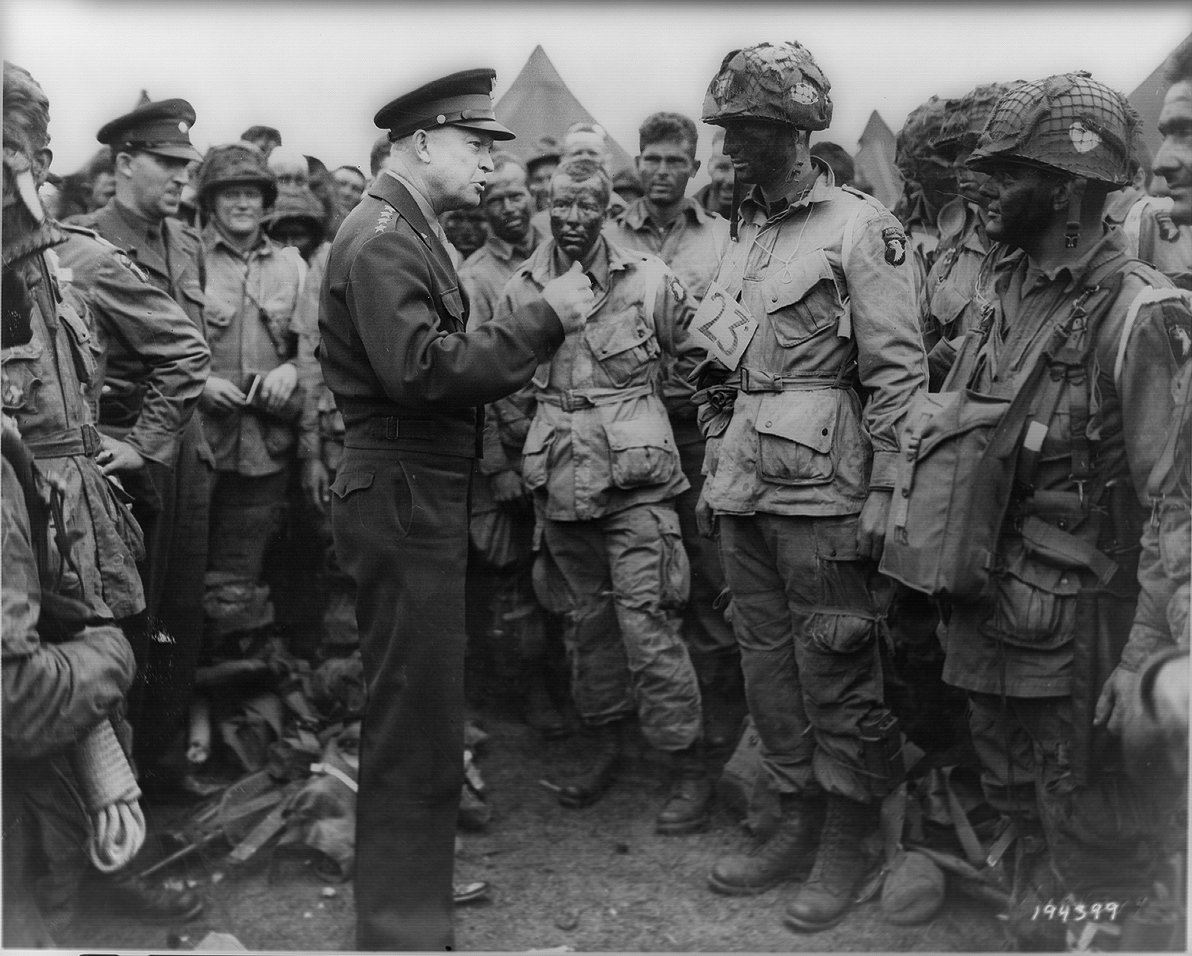
Though the 156,000 British, American and Canadian troops who stormed the beaches of Normandy endured heavy losses, they eventually prevailed and less than a year later, Hitler's would-be empire lay in ruins. Lauded as the mastermind of D-Day, Eisenhower served as military governor of the US Occupied Zone in Germany and then as US Army Chief of Staff. When he retired from military service in 1948, the five star General understandably wanted a quieter life away from the gaze of an adoring public, and thought he'd be getting one as the President of Columbia University.
This new, sedate role in academia have been enough for Eisenhower, but many Americans wanted their beloved war hero to pursue a different and more prestigious Presidency - one that would see him in the White House.
One of the many criticisms - a lot of them unfair - of Harry Truman was that he had little political experience before ascending to the highest office in the land after FDR's death in April 1945. He had only been Vice President 82 days, and had been in the Senate for nine years before Roosevelt chose him as his unlikely running mate - a short track record in Washington compared to other heirs apparent. Yet while Eisenhower had proved his political skill in working with Allied governments and tempestuous military figures like General George Patton, he had no background walking the corridors of power. So like his fellow Midwesterner Truman, who was from Missouri, Eisenhower was hardly a classic candidate for President.
This didn't deter the Republicans and Democrats from courting him in 1948. Before they nominated Dewey, the GOP figured that Ike could help them win an election for the first time since Herbert Hoover's victory in 1928. When he rebuffed them, the Democrats took their turn at persuading Ike to run in place of Truman, whose reputation still paled in comparison to that of his predecessor and who almost everyone - including First Lady Bess Truman - thought would lose come November. FDR's son James Roosevelt, tried to bring his family name and position of influence with California's Democratic organization to bear on Eisenhower. Powerful party men like New York mayor William O'Dwyer and Frank Hague of Jersey City then started petitioning the General. And labor chiefs Phil Murray of the CIO and Walter Reuther of the United Auto Workers, whose endorsements would guide millions of blue collar voters, also joined the call of duty.
It wasn't just establishment figures who wanted Ike to knock Truman aside, but also the youthful and increasingly popular Americans for Democratic Action (ADA). In June, another son of FDR, Elliot, drew cheers from an ADA rally in New York when he read a non-committal letter from Eisenhower that stated, "I am anxious to do my duty, but felt that it was my own problem to determine whether a sense of duty could call me into the political field." Though this was hardly a notice of acceptance, the ADA faithful drew hope from the fact that it wasn't a denial, either.
A month later, as delegates converged to select the Democratic Party candidate, ADA volunteers handed out hundreds of "I Like Ike" buttons. It seemed from the groundswell of sentiment in Philadelphia that all Eisenhower needed to do was say "yes" to become the Dem's nominee.
Click here to finish reading this article via the Huffington Post.
Want to order a signed copy of my new book, Whistle Stop: How 31,000 Miles of Train Travel, 352 Speeches, and a Little Midwest Gumption Saved the Presidency of Harry Truman? Then e-mail me or leave a comment on this post and I'll make it happen.


