Angela Merkel was once dubbed 'Frau Nein' for her refusal to be dragged into European policies that would over-extend Germany. Her strong leadership was compared by some to that of Margaret Thatcher, a new 'Iron Lady' for our fiscally turbulent times.
How things have changed. Merkel has become 'Frau Ja', at least when it comes to her plans for the EU to snatch what little self-determination its member states now retain.
At a joint press conference with David Cameron on 7 June, Merkel went far beyond her recent statements regarding Germany's willingness to cede sovereignty to a new, all-powerful iteration of the European Union. That's no longer enough. Now, according to Merkel, all EU member states must give up representative government, national interest and all semblance of liberty and freedom to the Brussels bureaucrats. In her own words:
"We need more Europe, a budget union, and we need a political union first and foremost. We must, step by step, cede responsibilities to Europe."
If you've been poisoned, does the emergency room doctor prescribe you more poison as the remedy? If you're morbidly obese, should you be rushed to an all-you-can-eat buffet and forced to gorge yourself to help you lose weight? Nor should the remedy for the ailments of the European Union, and they are many, be "more Europe"!
If this was the extent of Merkel's folly, it would be concerning enough, but the German leader had more to say about her phantasmagoric vision for the EU:
"We don't have a European public - domestically, every country has different priorities. A European public, a European audience needs to be created."
So, let me get this straight: It's a bad thing for a country to have its own priorities? For its politicians to do what is their raison d'être in any democracy, namely representing the wishes of their constituents in an elected parliament? Apparently democracy is well past its 'sell by' date and such things would just be selfish, at least according to Merkel and her EU cohorts.
Click here to finish reading at the Huffington Post
Showing posts with label European Union. Show all posts
Showing posts with label European Union. Show all posts
Wednesday, June 13, 2012


Wednesday, March 28, 2012
The U.N. and Syria: A "Mere Frothing of Words?"
In the past week, U.N. Special Envoy Kofi Annan proposed a six-point plan for ending the violence and oppression in Syria. As of today, the Arab League was discussing his proposal, and was expected to endorse it.

Syria itself has accepted Mr. Annan's call for a ceasefire and his other five points, though it has a long history of violating such agreements whenever President Bashar al-Assad feels like it. Shelling his citizens, including women and children. Torturing dissidents. Imprisoning journalists. These are the hallmarks of Assad's dictatorship.
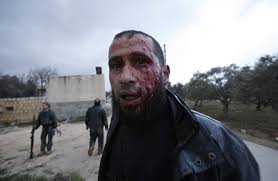
I applaud Annan's active diplomacy, his courage and his leadership. The former U.N. Secretary General has built his reputation on such pillars, in stark contrast with the Syrian despot he is attempting to peaceably remove.
However, I question why it took the United Nations so long to create such a plan. Same goes for the Arab League, which expelled Syria last year and yet has done little to effectively curb Assad's abuses.
During his March 1946 speech in Fulton, Mo., (actually called "The Sinews of Peace" but soon re-christened "The Iron Curtain speech"), Winston Churchill's most famous soundbytes were his definition of the Iron Curtain and the "special relationship" between the English-speaking peoples, led by Britain and America. Yet there are other significant messages therein that are often overlooked.
One such message is Churchill's urging that the U.N. become a "temple of peace" instead of a "Tower of Babel." Churchill also cautioned against the fledgling association succumbing to a "mere frothing of words" rather than active diplomacy backed by strength. He had witnessed first hand the failure of The League of Nations to achieve its primary aim, namely that World War I should be "the war to end all wars." With Nazism gone but the specter of Communism darkening Eastern Europe and menacing the Middle and Far East, Churchill realized that the new version of the League would have its work cut out. And so it proved.
While the U.N. eventually took decisive measures in Bosnia (thanks in no small part to President Bill Clinton's leadership) and has other successes it can be proud of, its record is blighted with inaction in Zimbabwe, Rwanda and Uganda, to name just three. This is not to say that the U.N. should be a hawkish organization that authorizes pre-emptive strikes or full-scale ground invasions every week. But neither should it, neither can it, sit idly by while ethnic cleansing, Assad-style brutality, and genocide occur under its very nose.
Churchill's advice?
"We must make sure that its work is fruitful, that it is a reality and not a sham, that it is a force for action, and not merely a frothing of words, that it is a true temple of peace in which the shields of many nations can some day be hung up, and not merely a cockpit in a Tower of Babel. Before we cast away the solid assurances of national armaments for self-preservation we must be certain that our temple is built, not upon shifting sands or quagmires, but upon the rock."
Or, roughly translated, the U.N. must be a body built on "the rock" of close associations within the Anglosphere, a body of nations committed to defending those who cannot defend themselves in word and in deed.
Congratulations to Mr. Annan on putting Churchill's timeless guidance into action. I hope it is not too late for the Syrian people.
Syria itself has accepted Mr. Annan's call for a ceasefire and his other five points, though it has a long history of violating such agreements whenever President Bashar al-Assad feels like it. Shelling his citizens, including women and children. Torturing dissidents. Imprisoning journalists. These are the hallmarks of Assad's dictatorship.
I applaud Annan's active diplomacy, his courage and his leadership. The former U.N. Secretary General has built his reputation on such pillars, in stark contrast with the Syrian despot he is attempting to peaceably remove.
However, I question why it took the United Nations so long to create such a plan. Same goes for the Arab League, which expelled Syria last year and yet has done little to effectively curb Assad's abuses.
During his March 1946 speech in Fulton, Mo., (actually called "The Sinews of Peace" but soon re-christened "The Iron Curtain speech"), Winston Churchill's most famous soundbytes were his definition of the Iron Curtain and the "special relationship" between the English-speaking peoples, led by Britain and America. Yet there are other significant messages therein that are often overlooked.
One such message is Churchill's urging that the U.N. become a "temple of peace" instead of a "Tower of Babel." Churchill also cautioned against the fledgling association succumbing to a "mere frothing of words" rather than active diplomacy backed by strength. He had witnessed first hand the failure of The League of Nations to achieve its primary aim, namely that World War I should be "the war to end all wars." With Nazism gone but the specter of Communism darkening Eastern Europe and menacing the Middle and Far East, Churchill realized that the new version of the League would have its work cut out. And so it proved.
While the U.N. eventually took decisive measures in Bosnia (thanks in no small part to President Bill Clinton's leadership) and has other successes it can be proud of, its record is blighted with inaction in Zimbabwe, Rwanda and Uganda, to name just three. This is not to say that the U.N. should be a hawkish organization that authorizes pre-emptive strikes or full-scale ground invasions every week. But neither should it, neither can it, sit idly by while ethnic cleansing, Assad-style brutality, and genocide occur under its very nose.
Churchill's advice?
"We must make sure that its work is fruitful, that it is a reality and not a sham, that it is a force for action, and not merely a frothing of words, that it is a true temple of peace in which the shields of many nations can some day be hung up, and not merely a cockpit in a Tower of Babel. Before we cast away the solid assurances of national armaments for self-preservation we must be certain that our temple is built, not upon shifting sands or quagmires, but upon the rock."
Or, roughly translated, the U.N. must be a body built on "the rock" of close associations within the Anglosphere, a body of nations committed to defending those who cannot defend themselves in word and in deed.
Congratulations to Mr. Annan on putting Churchill's timeless guidance into action. I hope it is not too late for the Syrian people.
Saturday, July 16, 2011
Winston Churchill on the EU
Churchill is misquoted and his quotes misrepresented (or presented completely out of context) more than any other historical figures. One topic area where his position is most widely misunderstood is European integration.
Yes, he did call for a "United States of Europe," which many Europhiles incorrectly see as justification for the EU as we know it today. However, we must look at WSC's motives behind such a proposition. First, he wished to check the spread of expansionist Communism, and knew the only way to do it was 1) a stronger "special relationship" between the British Commonwealth and the United States (as he called for at Fulton in March 1946) and 2) to rebuild Germany and reconcile her with France.
It's easy to see why Churchill's true views on Europe are hard to fathom, as he did not provide concrete plans on how European collaboration should take form. But, his most telling statement, to his aide Jock Colville in 1941, provides some clarity. Churchill told the young man that in a new European community: “while Britain might be the builder and Britain might live in the house, she would always preserve her liberty of choice and would be the natural, undisputed link with the Americas and the Commonwealth."
Unfortunately, we live in a time when Brussels is fast curtailing Britain's "liberty of choice." Perhaps Mr. Cameron's government should re-evaluate Churchill's words and use them as a launch pad to recapture the powers that have been ceded to the EU 'parliament."
Yes, he did call for a "United States of Europe," which many Europhiles incorrectly see as justification for the EU as we know it today. However, we must look at WSC's motives behind such a proposition. First, he wished to check the spread of expansionist Communism, and knew the only way to do it was 1) a stronger "special relationship" between the British Commonwealth and the United States (as he called for at Fulton in March 1946) and 2) to rebuild Germany and reconcile her with France.
It's easy to see why Churchill's true views on Europe are hard to fathom, as he did not provide concrete plans on how European collaboration should take form. But, his most telling statement, to his aide Jock Colville in 1941, provides some clarity. Churchill told the young man that in a new European community: “while Britain might be the builder and Britain might live in the house, she would always preserve her liberty of choice and would be the natural, undisputed link with the Americas and the Commonwealth."
Unfortunately, we live in a time when Brussels is fast curtailing Britain's "liberty of choice." Perhaps Mr. Cameron's government should re-evaluate Churchill's words and use them as a launch pad to recapture the powers that have been ceded to the EU 'parliament."
Subscribe to:
Posts (Atom)