Showing posts with label David McCullough. Show all posts

Friday, March 13, 2015

Spring 2015 History Book Bonanza: David McCullough, Erik Larson & Matthew Pearl

Do you devour history and historical fiction books? Then you're in for a feast in the next few months, as some of the most talented writers in these genres unveil their latest work.
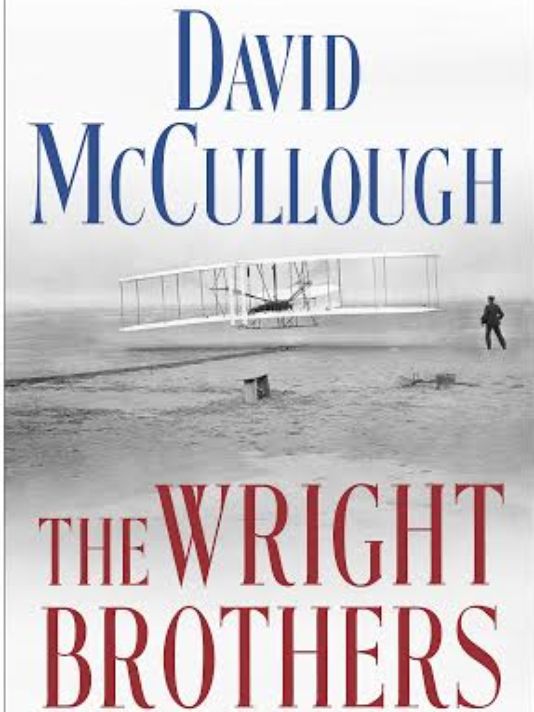
First up is America's king of so-called "popular history" - which really means non-boring, highly readable accounts that are the opposite of dry academic tomes - David McCullough. Having given new life to pivotal figures such as John Adams and Harry Truman, McCullough has now turned his attention to the fathers of powered flight, the Wright brothers.
It's hard to imagine that it has been less than 120 years since Orville and Wilbur Wright started tinkering with old bicycle parts in their Dayton, Ohio workshop. Just seven years later, Orville took their fragile glider up to 20 feet above a North Carolina beach for 12 seconds, and the aerospace age was upon us. There have been many books dedicated to the topic but as ever, McCullough has dived deep into archival materials and emerged with fascinating new insights that will keep readers spellbound from page one of this engrossing biography.
2015-03-06-1425600045-9112376-WrightBroscover.jpg
We learn for the first time that any portrait of the Wright siblings is incomplete without the inclusion of Katharine, who spurred her brothers on to (pun alert) greater heights. As McCullough reaches his dotage, we should savor each and every volume he creates in his New England writing hut/garden shed, for when he departs there will be an immeasurable void for the millions of readers whom his biographies have touched.
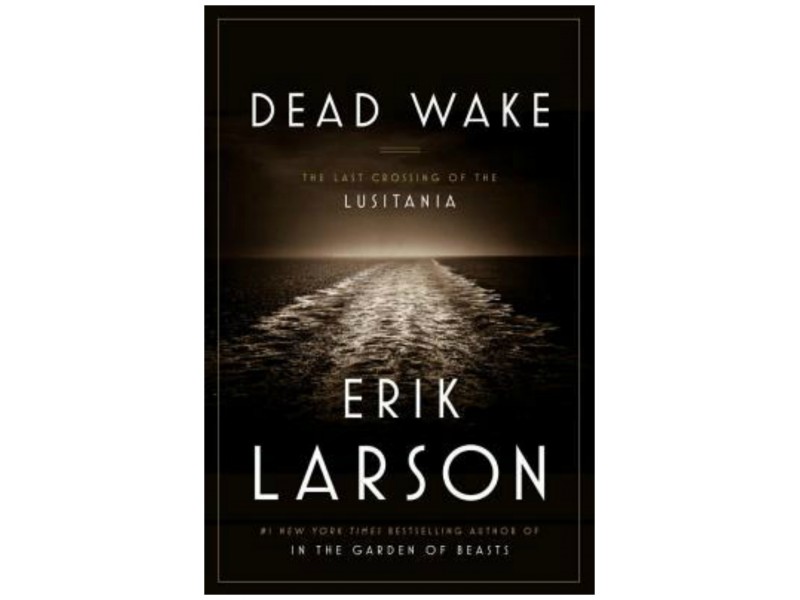
Erik Larson is another American chronicler extraordinaire who's releasing a new book this spring. His previous offering, In the Garden of Beasts, focused on the US ambassador to Germany as he witnessed increasing Nazi violence in the run up to World War II. Now, with Dead Wake, Larson takes us back to the previous global conflict and the harrowing story of the Lusitania sinking. As with the Wright brothers, this is hardly a new or obscure topic for writers to tackle. And yet Larson transcends the material by taking us beyond geopolitical circumstances and humanizing the story.
2015-03-06-1425600072-8778435-DeadWakecover.jpg
For the first time, we're drawn into the lives of passengers and crew members, with the result of humanizing the well-known tale in a way that Larson fans know well. His trademark warts-and-all sketches give us three-dimensional characters who we can relate to as they sail ever closer to their doom, even as the US unknowingly drifts toward embroilment in World War I.
While Larson and McCullough stick to the realm of facts, Matthew Pearl uses actual people and events to fashion inspired historical fiction. His forthcoming book, The Last Bookaneer, sees Robert Louis Stevenson beavering away on his next novel on the island of Samoa. Little does he know that two book thieves are on their way to steal the manuscript and sell it before a new international copyright law outlaws such literary piracy. 
Click here to finish reading via the Huffington Post. 


Wednesday, October 10, 2012

The College Writing Problem: Stop the Presses for Journalism and English Majors

In the course of the Atlantic’s recent series, The Writing Revolution, contributors have explored how to inspire struggling students, discussed the need to go beyond curriculum requirements, and delved into the disparity between how American society treats its high school athletes and their star student classmates.

Each of these pieces has merit, and yet as I read them, I was inspired to move beyond what works and what doesn’t for K-12 writing instruction and jump ahead to the problems of writing in higher education.

In his fine essay, Arthur Applebee writes that in 2011, 40 to 41 percent of public school students at grades 8 and 12 were assigned less than a page of writing homework per week, and that 80 percent of these assignments didn’t involve composition.

You may think and hope that this dearth of practical writing is overcome once students pack their bags for college and that our higher education institutions have challenging syllabi that prepare able students to write the next great American novel, become the new David McCullough, or, heck, just eke out a living as a poet or freelance journalist. But, in many cases, such an assumption is ill founded.

The composition courses required at liberal arts colleges (typically Comp 1 and Comp 2) are usually a joke, covering the basics of grammar and style that previous generations mastered in high school or before. If you don’t know a verb from an adverb by the time you’re 18, what hope is there for you? Indeed, enterprising students can and should do all they can to avoid such rudimentary instruction—and the cost of six useless credit hours—by taking a CLEP test that exempts them from Comp course requirements.

The picture is little brighter when it comes to those brave and creative souls who choose an English or journalism degree. The typical limitation of the former is a lack of practical exercises that allow students to critically evaluate a text in a way that sharpens analytical skills applicable outside academia. The length and scope of such essays have been steadily reduced, to the point where a two-page, double-spaced exercise in brevity is the norm. There’s nothing wrong with being succinct, but such an assignment is a cakewalk for most able undergraduates. Many won’t excel unless they’re pushed, and a few hundred words now and again just isn’t going to cut it.

There are many challenges for journalism degree programs, but these can be distilled into two main points. First, the newspaper game has changed so much with the closing of many dailies and weekly publications, the staff cuts at others and the rise of online-only pubs like The Huffington Post, which rely ever more on unpaid contributors from its vast blogging network.

The same is true of magazines: while there are an increasing number of specialty publications and overall reading stats are up (if you believe the claims in the 2010—2011 Power of Print campaign run by the Big Five of Time Inc., Hearst, Advance Publications' Condé Nast, Wenner Media, and Meredith), many more have folded and many of the surviving titles are run by skeleton crews. Still more titles have become online-only ventures that require Web 3.0-ready writing—complete with tags, optimized search terms and such—elements all too often ignored by behind-the-times journalism programs.


Click here to read the rest of the post at the blog of Boston University's Historical Society

Friday, September 23, 2011

Book Edits - Everything Comes Full Circle

Last weekend was a blur of quad espressos, 18-hour work sessions, little sleep and headphones jammed so deep in my ears for so long I'm surprised I got them out again. Why? Responding to my editor's comments and changes to the manuscript for my forthcoming book, Our Supreme Task: How Winston Churchill's Iron Curtain Speech Defined the Cold War Alliance. 


20,000 words, one reformatted chapter and two completely overhauled chapters later, and the book is in production. To quote from Monty Python and the Holy Grail: "And there was much rejoicing."


So I could concentrate, I split my time between a local Starbucks - where I shamelessly hogged the only big table, spreading out pages in a random order that MIT mathematicians would struggle to interpret - and Mabee Library at my alma mater, MidAmerica Nazarene University. Late Sunday night, it struck me that there was something circular about finishing this process at the latter venue. In the second half of 2009, I spent many evenings hidden away in a corner of this library, poring over interlibrary loan books as I researched the background to Churchill's speech, his life in 1945 and 1946 and the people influenced by his unlikely appearance in Fulton, Missouri. Now, in September 2012, here I was again, this time trying to get past my ego and make the cuts needed to wrap up the project (more on this in the next blog post).

This got me thinking: how does location affect research and writing?

For certain texts, such as Thoreau's  Walden, a certain location is essential, and could not have been any different. But what about President Obama's inauguration address, written in a Washington Starbucks by then 27-year-old Jon Favreau (not to be confused with the Iron Man director, this Favreau is one month younger than me and is the Director of Speechwriting in the White House - unbelievable!)? Did the partially overheard conversations, whir of grinding beans and whoosh of the steam wands affect the content or tone of this speech? Is David McCullough's narrative voice so consistent because he writes each book in seclusion in a modified shed, as did children's author and onetime propaganda agent Roald Dahl?


I welcome your insights and opinions, dear readers!

Postscript: I realized, after re-reading the piece on Favreau in The Guardian (linked to above) that James Fallows of The Atlantic was the same age as Favreau when appointed head speechwriter for President Jimmy Carter. Fascinating.

Citations: Source for Mabee Library picture: MidAmerica Nazarene University
Source for David McCullough image: Pittsburgh Post-Gazette.
These two entities hold the copyright to the images.