Showing posts with label history. Show all posts

Friday, March 13, 2015

Spring 2015 History Book Bonanza: David McCullough, Erik Larson & Matthew Pearl

Do you devour history and historical fiction books? Then you're in for a feast in the next few months, as some of the most talented writers in these genres unveil their latest work.
First up is America's king of so-called "popular history" - which really means non-boring, highly readable accounts that are the opposite of dry academic tomes - David McCullough. Having given new life to pivotal figures such as John Adams and Harry Truman, McCullough has now turned his attention to the fathers of powered flight, the Wright brothers.
It's hard to imagine that it has been less than 120 years since Orville and Wilbur Wright started tinkering with old bicycle parts in their Dayton, Ohio workshop. Just seven years later, Orville took their fragile glider up to 20 feet above a North Carolina beach for 12 seconds, and the aerospace age was upon us. There have been many books dedicated to the topic but as ever, McCullough has dived deep into archival materials and emerged with fascinating new insights that will keep readers spellbound from page one of this engrossing biography.
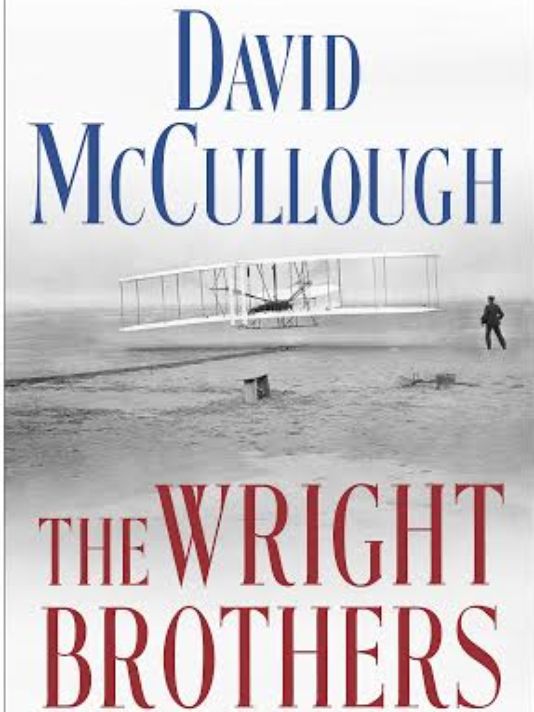
2015-03-06-1425600045-9112376-WrightBroscover.jpg
We learn for the first time that any portrait of the Wright siblings is incomplete without the inclusion of Katharine, who spurred her brothers on to (pun alert) greater heights. As McCullough reaches his dotage, we should savor each and every volume he creates in his New England writing hut/garden shed, for when he departs there will be an immeasurable void for the millions of readers whom his biographies have touched.
Erik Larson is another American chronicler extraordinaire who's releasing a new book this spring. His previous offering, In the Garden of Beasts, focused on the US ambassador to Germany as he witnessed increasing Nazi violence in the run up to World War II. Now, with Dead Wake, Larson takes us back to the previous global conflict and the harrowing story of the Lusitania sinking. As with the Wright brothers, this is hardly a new or obscure topic for writers to tackle. And yet Larson transcends the material by taking us beyond geopolitical circumstances and humanizing the story.
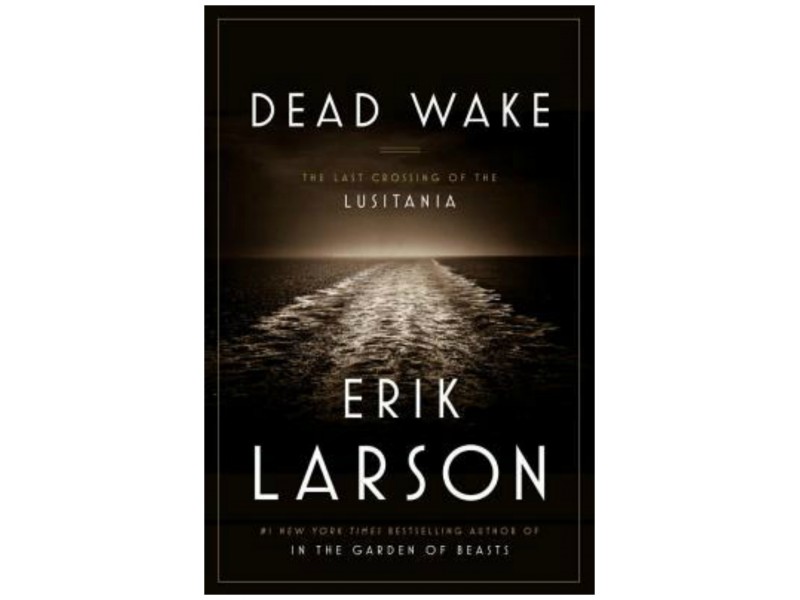
2015-03-06-1425600072-8778435-DeadWakecover.jpg
For the first time, we're drawn into the lives of passengers and crew members, with the result of humanizing the well-known tale in a way that Larson fans know well. His trademark warts-and-all sketches give us three-dimensional characters who we can relate to as they sail ever closer to their doom, even as the US unknowingly drifts toward embroilment in World War I.
While Larson and McCullough stick to the realm of facts, Matthew Pearl uses actual people and events to fashion inspired historical fiction. His forthcoming book, The Last Bookaneer, sees Robert Louis Stevenson beavering away on his next novel on the island of Samoa. Little does he know that two book thieves are on their way to steal the manuscript and sell it before a new international copyright law outlaws such literary piracy. 
Click here to finish reading via the Huffington Post. 


Sunday, March 24, 2013

Budget BS: The Sequester Hits History

When we think about the budget mess in Washington, it’s easy to focus on how it affects what’s now and what’s next. But what’s often overlooked is how budget cuts impact the study of the past. Or, how those cuts might shape history for current and future generations.

Harry S. Truman's farm home in Grandview, Missouri
In the past year, I’ve spent many a Saturday morning at the Harry S. Truman Museum and Library in Independence, Mo., merrily panning for research gold sifting through umpteen boxes and folders. Thankfully the museum and the researcher’s reading room/library will not be closing.

But as of March 24, Truman’s old white-board home in Independence (which he far preferred to the other White House he lived in, dubbing the latter, “the great white jail”) will be closed on national holidays, Sundays and Mondays. The Noland house across the street, which once belonged to Truman’s cousins, is being shuttered for good. And though visitors can still mosey around the grounds of the family farm in Grandview, Missouri, they’ll no longer be able to tour the house.

Click here to read the rest of this post on the blog of Boston University's The Historical Society.

And if you can, take a trip to the Truman Library and Museum. It's well worth it for anyone interested in the man who is, I'll wager, the most underrated US President. In the meantime, you could check out their website.

Tuesday, August 16, 2011

The Berlin Wall 50 Years On: Symbol of Division, and of Hope

This past weekend, German citizens turned out en masse to recognize the 50th anniversary of East German authorities putting up the Berlin Wall. Coming 15 years after Winston Churchill’s Sinews of Peace speech, this barrier was the embodiment of the Iron Curtain that the British Prime Minister (ex-PM at the time) had spoken of in March 1946. The Wall not only carved Berlin in twain, but also the political and philosophical world – with liberal democracies with capitalist economic models on the western side and the totalitarian Communist regimes on the eastern.

Many desperate souls from the east (at least 136 reported, with many other likely not counted) died trying to cross the wall and with each failed attempt, the dreams of families hoping for a different life in the west perished, too. The commemoration in Berlin was no celebration, but rather a somber affair marked by church bells pealing out and flags billowing in the breeze at half-mast on the Reichstag. In the spot where the wall stood is now a chapel, which held a memorial service for those who lost their lives during the Wall’s 28 years.

Before the concrete monstrosity went up, more than 2.5 million Germans had gone to the Allied occupation zones in the west of the city, according to The Daily Telegraph. One of the reasons for constructing the wall was the fear that this flight would leave the eastern part of the city economically destitute. Yet it was also, in many ways, a barrier to keep things out, not least “dangerous” Western ideas about freedom of the ballot box, speech and expression.